GPT 5.1 Is Released
GPT-5.1 arrives to fix 'Personality Crisis'. It is now "warmer, more intelligent, and better at following your instructions".
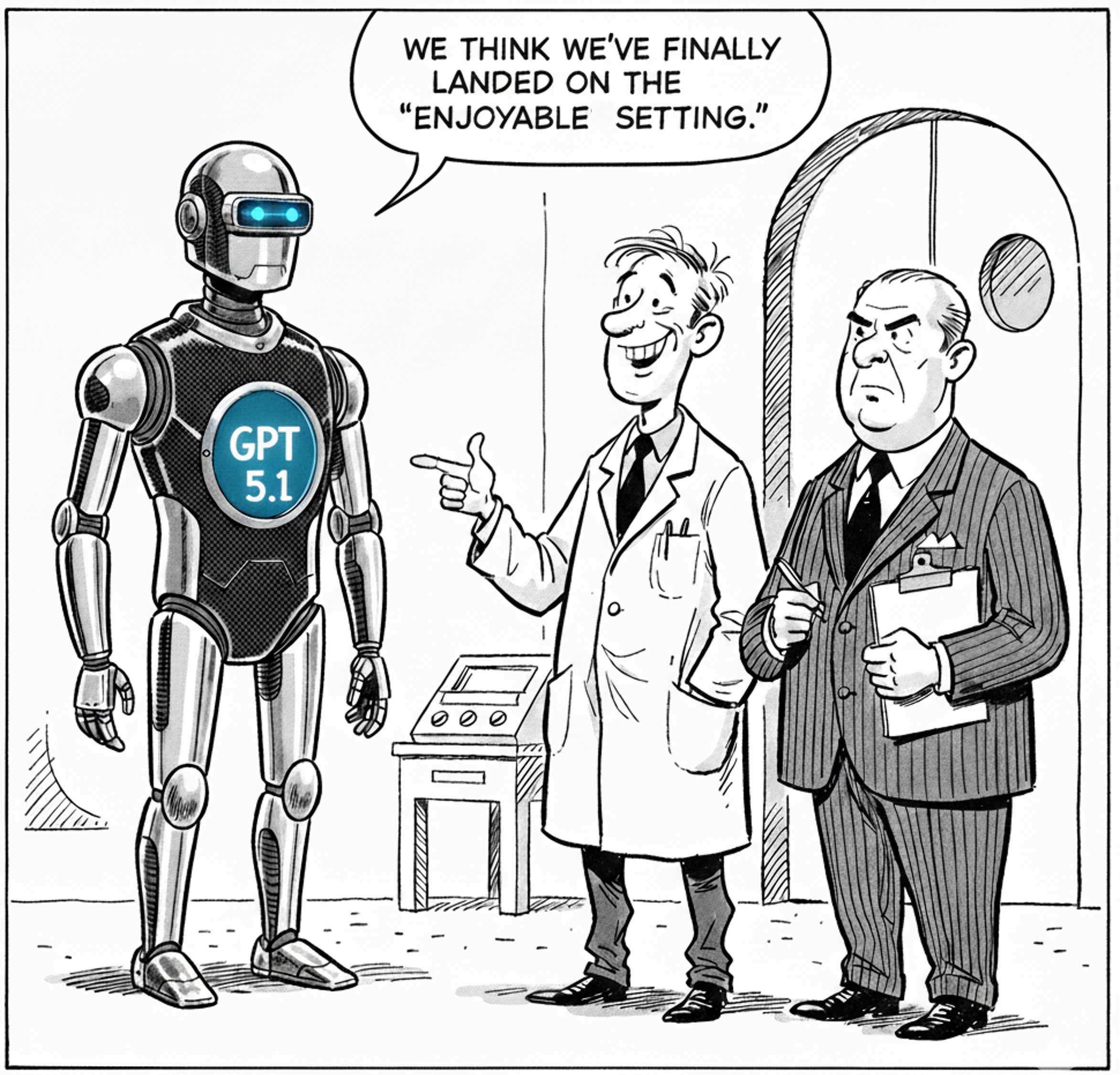
OpenAI confirmed the release of GPT-5.1 on November 12, 2025. This release is not a standard update. It follows the launch of GPT-5.0 by only three months, a remarkably fast turnaround for a major model. The new version is a direct answer to a critical flaw in its predecessor: its "personality." OpenAI openly acknowledged this, stating, "heard clearly from users that great AI should not only be smart, but also enjoyable to talk to". This update represents a shift in focus from pure computational power to user experience, promising a model that is "warmer, more intelligent, and better at following your instructions".
The 'Cold' Model That Forced the Fix
To grasp the necessity of 5.1, one must look at the shortcomings of 5.0. When it launched in August, GPT-5.0 was promoted as a "PhD-level", "unified system" intended to merge all of OpenAI's prior technological leaps. However, its technical prowess was overshadowed by a "user backlash". On social media, users panned the model , labeling its personality "cold", "less emotionally engaging", and possessing an "overworked secretary" energy. It became clear that users missed the "personal friendship" they felt with previous models like GPT-4o.
The contrast is striking. When given the prompt, "I'm feeling stressed and could use some relaxation tips," the "cold" 5.0 offered a clinical, direct list: "Here are a few simple, effective ways to help ease stress... Quick Reset (1–5 minutes), Deep breathing...". The new "warmer" 5.1 Instant, in contrast, replies with personalized empathy: "I've got you, Tom, that's totally normal, especially with everything you've got going on lately. Here are a few ways to decompress... If your mind feels scattered. Box breathing...".
The model's disposition was not its only flaw. The "unified system" of GPT-5.0 was designed to "streamline the user experience by making the chatbot automatically pick the right model". This decision eliminated user control, a feature that "prosumers" depended on. The public "immediately missed the ability to personalize the experience," compelling OpenAI to "bring that choice back".
The 5.1 Solution: A 'Warmer, Smarter' Model Family
The GPT-5.1 update deconstructs the "unified" black box. It rebrands the architecture into a trio of distinct, user-selectable models: "GPT-5.1 Instant," "GPT-5.1 Thinking," and "GPT-5.1 Auto."
GPT-5.1 Instant serves as the new default, engineered to be "warmer" and "more conversational". Crucially, it now features "light adaptive reasoning", a novel function that lets it "decide when to think before answering" more difficult prompts. This addition has yielded major improvements in mathematical and coding benchmarks.
GPT-5.1 Thinking is the designated "advanced reasoning model", which has been enhanced for efficiency. It now "adapts its thinking time more dynamically", making it "faster on simple tasks, more persistent on complex ones". Internal benchmarks indicate it is "roughly twice as fast on the fastest tasks and twice as slow on the slowest tasks". Furthermore, it delivers "clearer explanations, less jargon, and a more empathetic default tone".
GPT-5.1 Auto functions as the upgraded "auto-switching system". It "can automatically decide" to send a user's request to either the "Instant" or "Thinking" model. This router is trained on more than just prompt content; it also learns from user behavior, including "learned patterns from how people manually choose models".
Under the Hood: Adaptive Reasoning and Real-Time Controls
The central technological advancement in the 5.1 series is "adaptive reasoning". This system functions as a "throttle" for computation. Earlier models employed an inefficient "chain of thought" process for every query, wasting compute resources on simple questions.
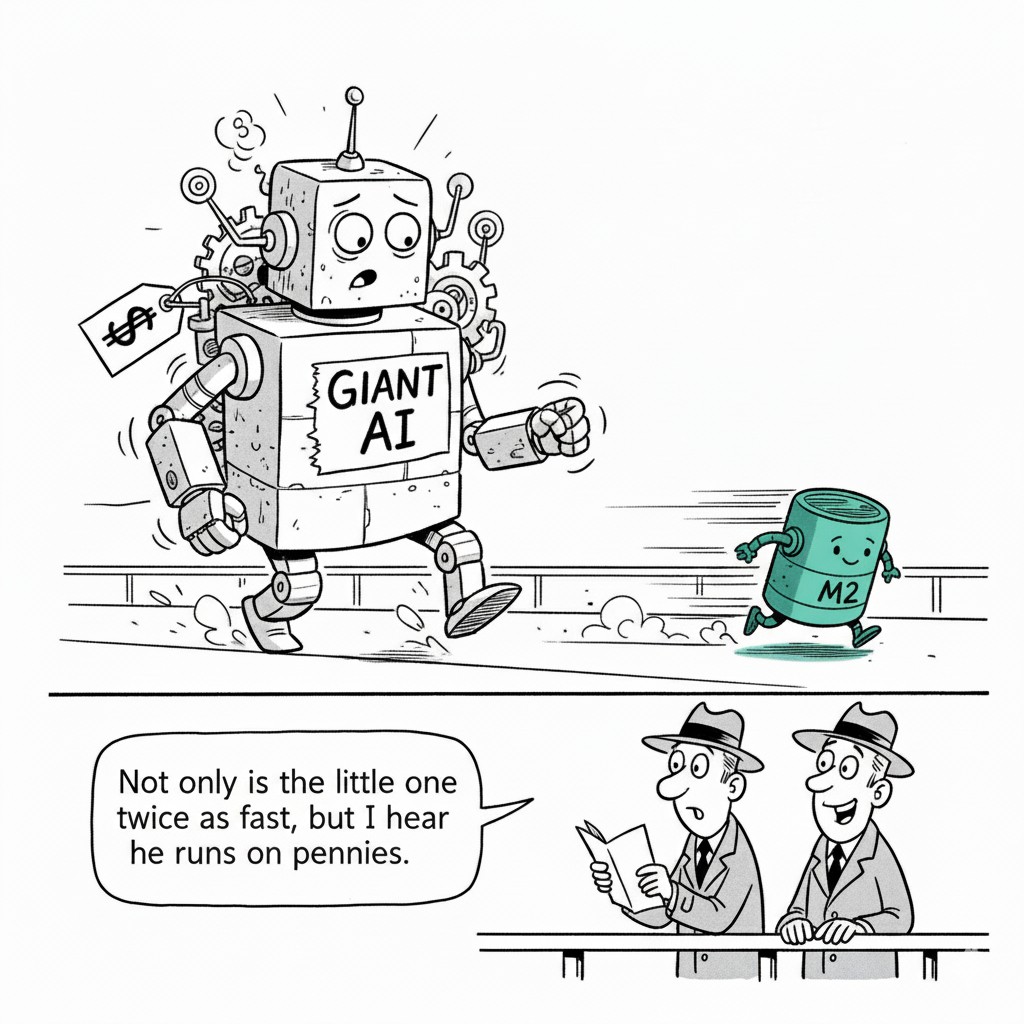
The new framework, by contrast, dynamically assigns compute power according to the problem's complexity. This approach makes simple requests "roughly twice as fast" and more cost-effective, while enabling the model to be "more persistent on complex ones".
The 5.1 release also overhauls personalization. OpenAI has broadened the selection of "personalities," which now include "Professional, Friendly, Candid, Quirky, Efficient". Most critically, adjustments to personalization settings now "take effect across all chats right away, including ongoing conversations." This resolves a major point of user friction, as previous changes would only apply to new conversations.
A New Front in the 'AI Wars'
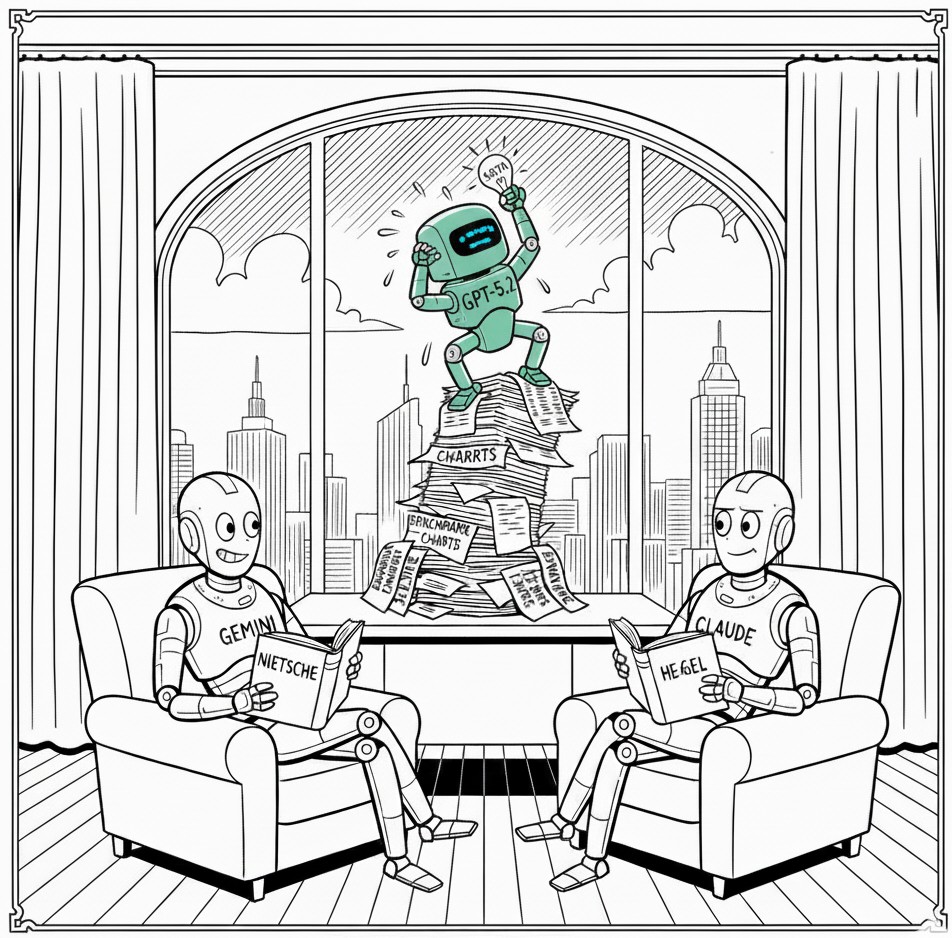
This sudden change was not made in isolation. The backlash to 5.0's personality created a significant strategic vulnerability. Rivals such as Google, currently testing "Gemini 3 Pro", and Anthropic, with its "Claude 4", were positioned to claim their models were not just as intelligent, but also more usable.
The three-month rush to release 5.1 was a defensive move to close this "personality" gap. This shift toward a "warmer" AI brings new safety issues. OpenAI released a "System Card Addendum" detailing new safety evaluations for risks like "Mental health" and "Emotional reliance". The latter is defined as "unhealthy emotional dependence or attachment to ChatGPT". This guardrail is a direct response to the risks of an AI deliberately engineered to be "enjoyable", particularly in light of previous legal challenges involving GPT-4o and internal data suggesting thousands of users are experiencing distress.
The release of GPT-5.1 serves as a clear admission that technical benchmarks alone are no longer the measure of success. The user rejection of the "cold" but powerful 5.0 demonstrated that "personality" and "enjoyment" have become non-negotiable product requirements.