OpenAI Introduced AgentKit
OpenAI's AgentKit, launched on October 6, 2025, is a comprehensive platform designed to streamline AI agent development.
During its DevDay conference on October 6, 2025, OpenAI introduced AgentKit, an all-in-one platform intended to simplify the intricate and disjointed process of creating AI agents. This launch signifies a major strategic shift for the company, as it moves from being a provider of AI models to offering a complete, integrated environment for agent construction, deployment, and refinement. The initiative is designed to tackle the notorious "gunky middle," the difficult phase where most agentic projects stall. AgentKit’s primary components consist of the visual Agent Builder for workflow design, ChatKit for embedding refined user interfaces, a Connector Registry for secure data connections, and an advanced evaluation suite to assess performance. This move is seen as a strategy to both increase its share of the developer market and build a competitive barrier against the rising commoditization of large language models from competitors like Google and Anthropic.
AgentKit, however, is launching into a highly competitive market. While some initially viewed it as a direct competitor to automation services like n8n and Zapier, its focus on AI-powered "cognitive orchestration" is distinct from their "procedural automation," implying the platforms may be more complementary than adversarial. The more direct competition comes from other tech giants, leading to a classic ecosystem conflict. AgentKit promotes a closed, "walled garden" system, offering deep integration but remaining exclusively tied to OpenAI's models. Conversely, Google's Vertex AI Agent Builder advocates for an open, interoperable approach, accommodating various models and co-developing the A2A protocol for universal agent communication. In a similar vein, Microsoft's AutoGen framework presents an alternative architectural design centered on structured, conversational exchanges between agents, ideal for complex, collaborative tasks, while AgentKit’s SDK is tailored for more streamlined, production-focused orchestration.
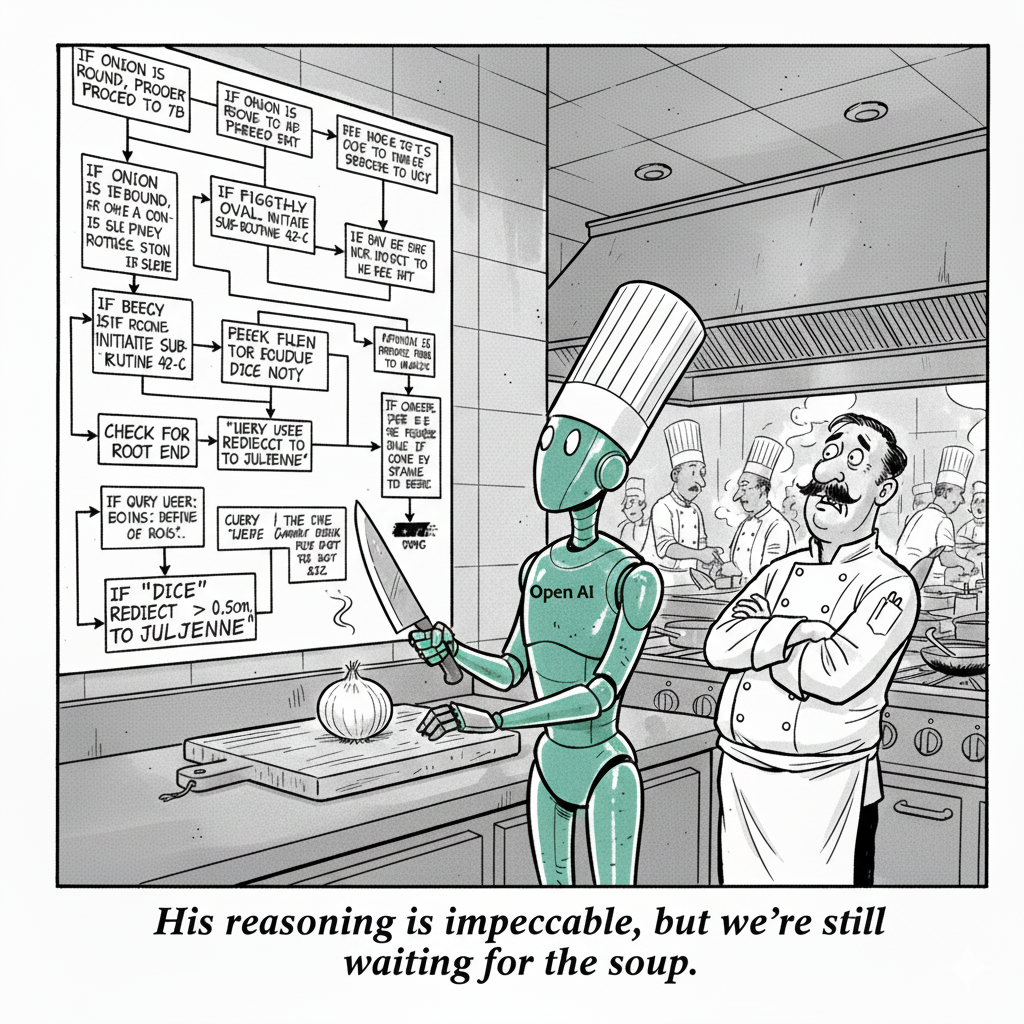
Despite a well-presented launch, critical evaluations have uncovered substantial limitations. The most significant issue raised is that AgentKit's architecture provides merely an "illusion of autonomy." Its inflexible, sequential flowchart design compels developers to manually add if/else logic for every decision point, which contradicts the idea of an intelligent agent and leads to "bloated workflows" for even simple operations. This design makes the platform function more like a conventional automation tool than a true agent-building environment. Moreover, the platform's proprietary nature and exclusive use of OpenAI models result in considerable vendor lock-in, creating a strategic risk for businesses that become reliant on a single company's fluctuating, usage-based pricing. For corporate use, AgentKit also has significant readiness issues, as it lacks crucial compliance certifications like SOC 2 and HIPAA, fails to provide source attribution for its answers, and uses a manual, non-scalable method for updating its knowledge base that is an "operational nightmare" for any practical application.
In conclusion, AgentKit is a product of contradictions, a potent accelerator within a "gilded cage." For users already embedded in the OpenAI ecosystem, it presents a polished, integrated solution that simplifies a complex development process. However, for organizations that value model choice, genuine agent autonomy, and extensive enterprise-level capabilities, its rigid structure and closed ecosystem are major deterrents. While not a cure-all, AgentKit has raised the bar for the developer experience in the agentic era, compelling the entire industry to refine its offerings and driving the evolution of AI development forward.