From Prompt to 3D Print: The Adam AI-Powered 3D Design Platform
How a new browser-based tool uses conversational AI to disrupt the complex world of traditional CAD, making 3D printing and design accessible to all.
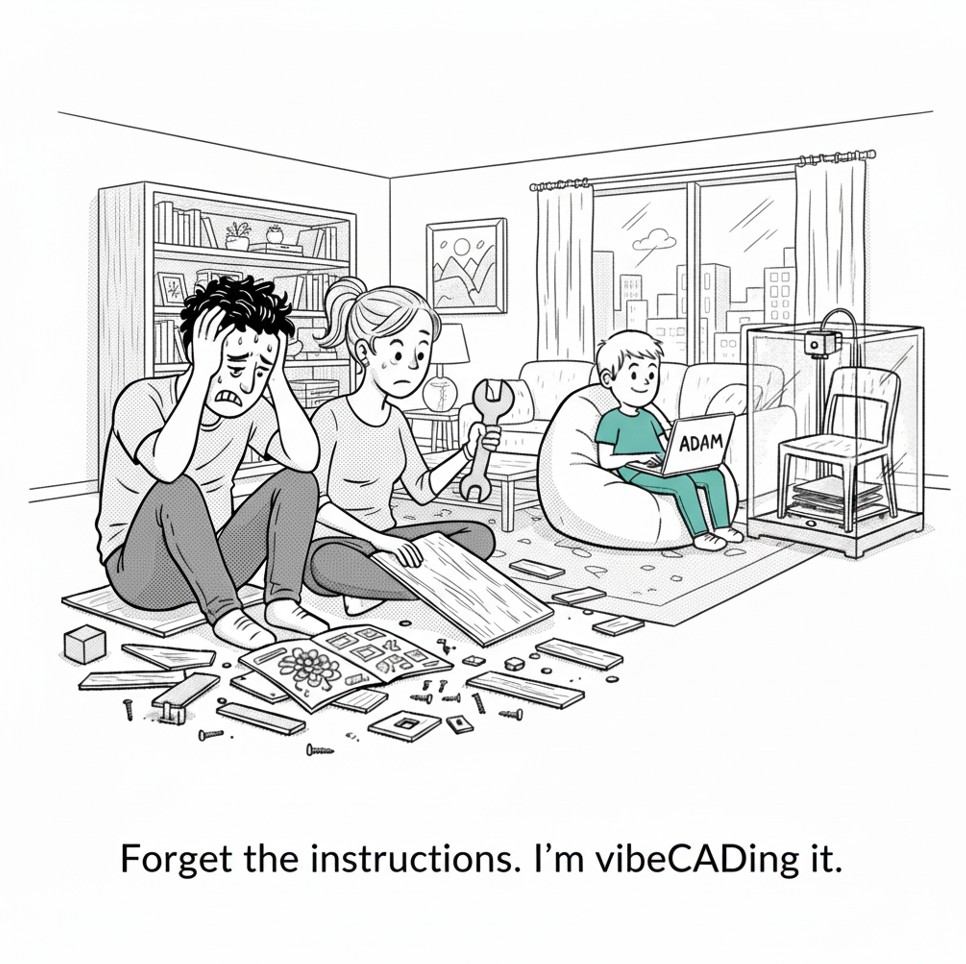
Adam is a new AI-powered, browser-based platform aiming to revolutionize 3D design by allowing users to generate models from simple text descriptions. It challenges the complexity of traditional CAD software with an intuitive, conversational interface, a concept called "vibeCADing," making 3D modeling accessible to a wider audience.
Technically, the platform uses an AI to translate natural language prompts into OpenSCAD, a script-based CAD language. The entire engine runs in-browser via WebAssembly, rendering models in real-time and automatically creating parametric sliders for instant, AI-free design adjustments. The core technology is available as an open-source project, CADAM, which helps build community and funnels users to the commercial platform's tiered subscription plans.
For the 3D printing community, Adam dramatically accelerates the workflow, enabling the creation of printable STL files in minutes. It can generate print-ready models and even optimize designs for manufacturability through simple text commands. While ideal for rapid prototyping, it currently lacks the precision of traditional CAD for highly complex engineering parts.
Backed by Y Combinator, Adam's strategy is to disrupt the market with accessibility and speed. Future plans include an "Adam Co-Pilot" designed to integrate with and augment professional CAD software, combining AI's intuitive nature with the precision of established tools. By lowering the barrier to entry, Adam aims to democratize digital fabrication and significantly shorten the path from idea to physical object.